
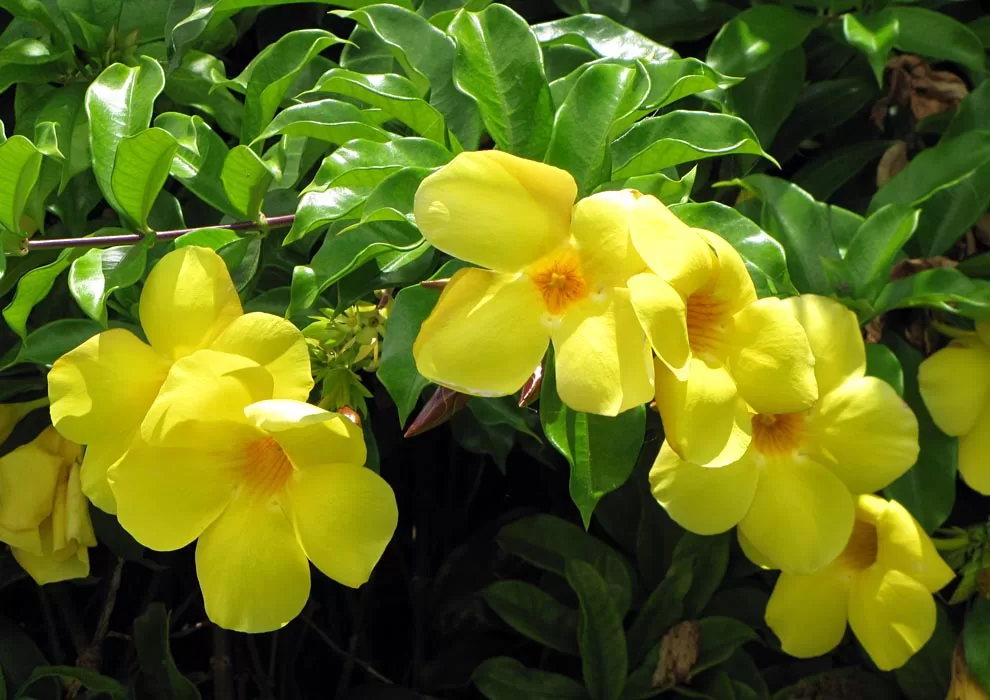
Allamanda (Allamanda cathartica) is a stunning tropical climber prized for its glossy foliage and large, fragrant yellow blooms. It can be a bit demanding in a typical living room, but with bright light, regular moisture and a boost from nutrient-rich Pure Worm Castings, you’ll enjoy its exotic beauty year after year.
Buying Tips for Allamanda
When you’re at the nursery, use these simple checks to pick a vigorous, pest-free plant:
Shiny, Deep-Green Leaves
Look for foliage that’s vivid and even in color. Yellow patches or brown spots often mean stress or poor nutrition .Secure Flower Clusters
Give the bloom-bearing shoots a gentle tap. Healthy stems hold their flowers firmly. Blooms that drop easily usually signal weak stems or under-watering .Pest Inspection
Check under leaves and at leaf joints for tiny insects or fine webs. Aphids and spider mites often hide on new growth—skip any plant showing these signs .Root Health
If you can see the pot’s drainage holes, look for creamy-white roots filling the container without circling tightly. Crowded or waterlogged roots mean the plant is root-bound or over-watered .Seasonal Timing
July through September is peak bloom season. Buying in-flower lets you judge color, size and scent firsthand .Environment Check
Allamanda thrives in bright sun, warmth and humidity. If you lack a sunroom or greenhouse, plan for supplemental grow lights and regular misting.Support & Space
These vines can reach 15–18 ft. Make sure you have a sturdy trellis or frame and room for it to climb.Long-Term Commitment
With rich soil, consistent watering and feeding, a healthy Allamanda can reward you with blooms for many years.
Why Use Pure Worm Castings for Allamanda?
Pure Worm Castings are a natural, balanced source of nutrients plus beneficial microbes. They:
Improve soil structure for better moisture retention and aeration
Provide a slow-release feed that supports steady bloom production
Enhance root health, reducing transplant shock and improving nutrient uptake
Adding worm castings to your potting mix or top-dressing every two months can dramatically boost both foliage vigor and flower profusion .
Best Soil Mix & Transplanting
Allamanda thrives in a rich, moisture-retentive medium. Instead of full repots:
Gently remove the top 1½–2″ of soil around the root ball.
Mix in Pure Worm Castings with quality potting soil at a 1:4 ratio.
Firm lightly and water in well.
For large specimens, trim the outer roots rather than changing pots to avoid transplant shock.
Watering & Feeding
During active growth and bloom: Keep the mix evenly moist but never waterlogged. In hot weather, an extra mid-day drink can prevent flower drop.
Feeding schedule: Apply a balanced liquid fertilizer every two weeks, alternating with a light top-dressing of worm castings to sustain blooms.
Light, Temperature & Humidity
Light: Position in bright, direct sun—aim for strong light on shoot tips while companion plants provide gentle shade for lower foliage.
Temperature: Keep above 59 °F year-round.
Humidity: High humidity is crucial. In dry indoor air, mist with room-temperature, cooled-boiled water to deter spider mites.
Pruning & Grooming
When: In early spring, before new growth.
How: Remove dead wood and trim only unnecessary shoots blooms form on new growth, so avoid cutting flower-bearing tips.
Support: Train on a sturdy trellis to guide the vine and keep it tidy.
Propagation
Spring cuttings: Take 4–6″ tip cuttings, root in a peat-moss/sand mix under glass, then transplant once established.
Fall cuttings: Use mature, woodier stems at 68–75 °F; protect young plants under plastic or glass to overwinter
Pest & Disease Troubleshooting
Spider mites: Look for fine cobwebs beneath leaves. Boost humidity and use a safe miticide if needed.
Aphids: Check new growth; wash off with warm water or apply insecticidal soap.
General care: Inspect foliage regularly and isolate or prune any infested areas promptly to prevent spread.